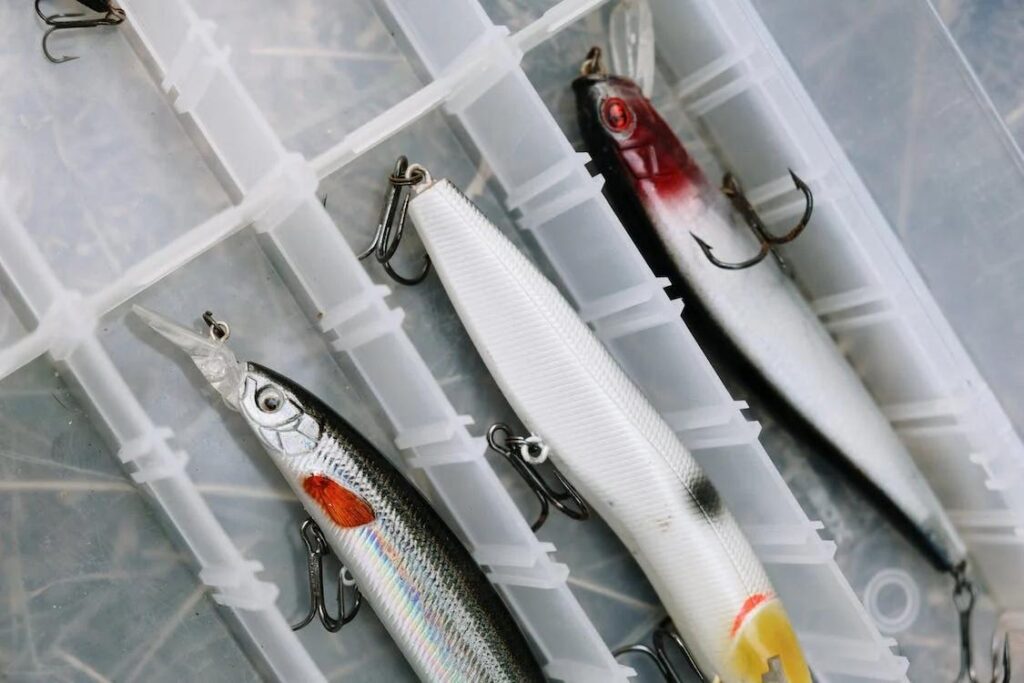
If you have ever joined a fishing enthusiast on one of their excursions, you might have seen them rummage through dozens of different lures before selecting the right one for their fishing pole. These lures are often dazzling to look at, and it’s easy to see why fish might be drawn to them. However, you might be puzzled about how to select the right lure for different situations.
In this guide, we aim to demystify fishing lures and help you figure out which ones you really need.
Table of Contents
When to Use Fishing Lures
If you are new to fishing you might be wondering why someone would use fishing lures instead of live bait. While live bait does attract a wide range of fish, it is better suited for fishing in murky waters in low light conditions. If you are fishing in clear waters on a bright and sunny day, a lure is definitely the way to go.
Fishing lures also have the added benefit of being reusable. By contrast bait can be used only once as it gets consumed by the fish.
Types of Fishing Lures
There is no shortage of fishing lure options out there. Some of the most popular types of fishing lures include:
Spoons
Spoons are a special type of fishing lure that have an oblong shape and a concave side. They are typically used in “trolling”, which refers to the practice of throwing a fishing line behind a moving boat and moving it from side to side. The lure’s concave side catches water, which causes it to wobble and attract fish.
Spoons are especially useful for attracting bigger fish species. This includes salmon, trout, largemouth bass, and northern pike.
Jigs
Jigs are one of the oldest types of fishing lures. This consists of a hook with a lead sinker molded onto it. This contraption is then covered by a softer body to conceal the hook.
Using jigs properly takes a bit of practice. When you feel a fish biting on the lure, you will need to jerk your fishing pole to pierce the fish with the hook. Jigs can be used to catch various types of fish species such as pike, panfish, bass, and walleye.
Spinners
Spinners are one of the most reliable types of lures for catching trout. These lures have metal blades that spin when they are dragged through water. This spinning motion creates vibrations that attract nearby fish. This setup makes spinners great for use in both clear and murky water conditions.
These lures are great for catching salmon, chub, perch, pike, walleye, bream, and blue kurper. Consider getting some spinners if you want to attract a wide variety of fish.
Crankbaits
A crankbait is a special type of lure that is designed to zip through the water at high speeds. They come in many colors and shapes. One of the main advantages of crankbaits is that you can control the depth the lure sinks to by choosing different line diameters.
Different types of fish are attracted to certain crankbait colors, so you might need to choose the kind that resembles specific bait types. For example, a crankfish that resembles shad is perfect for attracting bass.
Buzz Baits
Buzz baits are a unique lure type that live up to their name. These lures create a buzzing sound as they are dragged through the water. This wakes up any slumbering fish in the vicinity and causes them to chase after the lure.
They are constructed from a metal wire frame that is bent into a J-shape and have a blade rigged to their top. They typically have silicon skirts to conceal their blade while still producing that distinct buzzing sound that drives fish crazy.
Consider investing in a buzz bait lure if you’re interested in catching pickerel, pike, or bass.
Paddle Tails
Paddle tails are special lures that fall under the category of lures known as swimbaits. Such lures resemble different types of bait fishes that are perfect for catching bass.
Paddle tails are considered “soft-bodied” lures because they are made from soft plastics. Such lures don’t come with hooks embedded in them, so you will need to add these hooks yourself.
Paddle tails are especially useful for weedy areas or for waters with strong currents or tidal flows. Such lures perform well in these environments for their soft-bodied forms that adapt to the conditions they are in. By contrast, hard bodied lures are likely to get caught up in weeds or strong waters, which limits their usefulness in these conditions.
Hard Body
Hard body lures also fall under the swimbaits category. Such lures should never be used in weedy areas. Instead, they are great for more open environments such as lakes, rivers, and dam reservoirs.
Lots of fish such as walleye, pike, and trout flock to hard body lures because they imitate live bait well. Consider getting hard body lures if you want to catch many types of fish.
Flies
Flies are especially unique lure types because of their lightweight. Such lures are still capable of attractive large fish such as bass and pike.
Most traditional lure types rely on the lure’s weight when casting the lure forward. However, the fly’s light weight doesn’t offer this benefit. Instead, you will need to use a special fly line that is designed to be heavy for casting purposes.
When used correctly, flies can imitate the type of fish that many larger predatory fish prey on. This makes them a great option for skilled fisherman who understand how different bait fish types behave.
Choosing the Perfect Lures
The above guide should be useful in helping you decide which fishing lures are right for you. So consider looking at the different fishing conditions you will encounter as well as the different types of fish you wish to catch when making your decision. Before you know it, you will also have a fantastic lure collection that rivals that of your fishing enthusiast friends.