
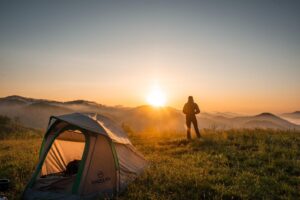
Solo camping is an adventure many of us want to enjoy at least once in our life – it is exciting and fun and gives you a sense of achievement and accomplishment that you need for a confidence boost.
But there is no doubt that traveling alone comes with its fair share of risks, and if you plan on going on a solo camping trip, you will need to be extra vigilant about planning your journey.
With no one else to share responsibilities with and rely on for planning and packing, solo campers need to be extra careful about the tiny details of their plan. But the most important factor to consider and take care of is safety – as a solo camper, your safety should be your priority, and you should take all the right measures to keep it in control.
This is why we decided to share this blog post with you. Today, we are sharing four tips to help you ensure your safety on your solo camping trip. So without further ado, let’s go!
Table of Contents
4 Tips to Ensure Safety on a Solo Camping Trip
1. Choose the Location Wisely
The location you choose for setting your camp is what actually determines your safety throughout the trip – especially if you plan on going for overnight camping. You need to make sure the location you pick as your campsite is well reviewed on the internet by other solo campers to ensure it’s a safe space for you to be alone.
Moreover, research the location well enough to familiarize yourself with the campsite, so you don’t get lost or stuck when you reach there. Other than that, there are some important factors about the location to consider before going – for example, make sure the group is suitable for setting a tent if that is the type of camping you want to go for.
Otherwise, if you are going car camping, do see if there is a proper parking space for you to stay in. Additionally, do check if the location is not a threat to various weather conditions for wild animals – you don’t want to face such a situation alone.
Always remember that an isolated place may excite your adventurous side, but it’s not safe for solo campers. National parks can be your best option if you want to prioritize your safety as well as natural beauty.
2. Check on Weather Updates Beforehand
This is another safety tip that most people forget when leaving for a trip to the outdoors. Weather is an important factor to consider and quite an unpredictable one at that, so you don’t want to face the adversaries that come with extreme weather conditions. Whether it’s strong winds, heavy rain or extremely chilly nights, harsh weather conditions can make it difficult to protect yourself.
If it starts raining or snowing while you are at your camping location, you will have to pack everything up and protect yourself and your essentials, but with nowhere there to help, this can get quite tough. Hence, taking precautionary measures is the best way to go, and in this case, the best precautionary measure is to keep checking weather updates of not only your campsite location but also the entire way to reach that place. If you think there is even a slight chance of rain, snow, or strong winds, it would be best to delay the trip.
3. Pack Everything You May Need
We know it is not advised to carry heavy loads on your camping trip, but you cannot miss anything when you are traveling alone. On your solo camping trip, you don’t want to be stuck in a situation where you don’t have your essentials with you to face it.
Make a checklist of all the items you know you will need and all the items you think you might need. If things get bad, and by this we don’t mean you should pack unnecessary items as well, which might take up extra space in your bag. What we mean to say is that you should pack and prepare for the worst.
Here are some things to keep:
- Make sure to have a sleeping bag with you, an insulating one if you are going in winter.
- Don’t forget the rain gear – you should always keep it with yourself; even if the weather updates tell you it won’t rain, there’s no harm in preparing a little extra.
- Pack lots of food and water to make sure you don’t get dehydrated or exhausted in the middle of a forest.
- Keep an aid kit, just in case you get an injury or keep sick. In the aid kit do all the medicines you need daily to keep your health in check.
- Keep a small knife and a small lighter or matchstick as protection at all times.
When leaving for your solo trip, keeping your family and friends in the loop is good. You want to be stuck at a random location all by yourself; you need someone backing you up, even if they might seem a little far. If you have a friend or a family member you can trust, you need to make sure that you tell them everything about your plans.
From when you leave to when you reach and what location you are picking. You already know getting reception in remote areas is difficult, and you don’t want to go MIA on your loved ones. Instead of leaving them worried and yourself with no backing, you should share your plans with at least one person who you know can come to your rescue in case the worst happens.
Plan a Safe Solo Camping Trip
Solo camping trips are actually the best kind of trips you can have in your lifetime; it’s the kind of trip you will remember forever. And that’s why we always encourage our readers to be more confident in themselves and never be hesitant about taking a solo trip.
But one important thing here is that you must ensure your safety. You cannot leave for a solo camping trip without considering the risks and dangers. Hence, it’s important to keep these safety tips in mind next time you plan a camping trip.