
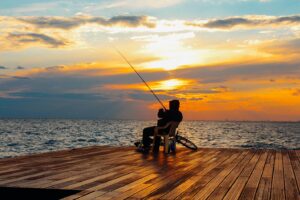
Have you ever wondered why millions of people worldwide go fishing now and then? And why are they so excited about such an activity? After all, you can simply go to your local fish market and purchase the most beautiful fish fillets, right? Yet, people still devote the effort and time to sit in their boats and learn how to catch a fish.
The simple truth is that a fishing trip can be a boatload of fun (pun intended). Moreover, the age-old saying, “give someone a fish, and you feed them for a day; teach them how to catch a fish, and you feed them for a lifetime,” is proof that fishing is also a life skill! Similarly, fishing can also be a good way for you and your family to escape your mundane, boring lifestyles.
That being said, learning how to fish typically requires a lot of practice, patience, and time. In fact, there are a plethora of things to consider when looking at tips on how to catch a fish, including:
- Knowing the type of fishing equipment you require
- Learning how to use said fishing equipment
- Researching the best fishing spots
- Understanding the luring, hooking, and reeling techniques
- Knowing how to clean the fish you’ve caught
However, fishing is all about taking one step at a time. So, on that note, let us look at a few tried and tested tips to catch a fish down below. These fishing tips apply to both larger fish and smaller fish.
Table of Contents
Get your Fishing License
Of course, a fishing license doesn’t have anything to do with learning how to catch a fish. However, you probably won’t be able to get near a fishing spot, let alone draw your fishing rod, if you don’t have a fishing license. Every state in America requires that you apply and get a fishing license.
That being said, getting one is fairly easy. Not to mention, it only costs around 20 dollars if you’re a US citizen. Moreover, you can easily apply for a fishing license online or ask your local fishing shop to do it for you. However, applying for an annual fishing license would be wise to avoid paying monthly license renewal fees.
Purchase The Right Fishing Gear
Purchasing the right fishing gear is probably one of the most important fishing tips, whether you’re looking to try salt water fishing or catch fresh water fish. However, when you visit your local fishing store to purchase fishing equipment, you will get spoiled for choice.
Furthermore, you will also notice that every type of fishing equipment is specifically designed to help you perfect a specific fishing style or catch a particular fish species. However, you don’t have to worry about all of this if you’re a rookie. Typically, it will be better to purchase a fishing rod with a spinning reel and rod combo, specifically if you’re a beginner.
A fishing rod with a spinning reel and rod combo has the following benefits:
- You can easily set up a fishing rod with a reel and rod combo
- You can easily adjust your drag on a fishing rod with a reel and rod combo
- You can quickly replace the reel handle, making your fishing rod suitable for both left and right-handed people
- You can skip lures under low hanging docks, piers, and bushes with the help of a fishing rod with a reel and rod combo
- You can throw a lighter real or artificial lure farther if you’re using a fishing rod with a reel and rod combo
Select the Right Fishing Lure and Tackle
The fishing lure and tackle are among the most important must-have fishing accessories to learn how to catch a fish easily.
Unfortunately, just like rods and reels, fishing equipment shops are full of different fishing lures and tackle, making it a headache to choose the right ones. Moreover, every fishing lure and tackle type is specifically designed to attract different fish species.
That being said, as a beginner angler, you don’t need to worry about this right now. Instead, it would be best to learn the basics. In fact, consider ditching artificial bait and go with live bait like worms, especially if you’re just starting out.
However, if you don’t know how to handle worms or think they’re too slimy, go with Powerbait, a material that can be attached to your fishing rod’s hook.
After you’re somewhat comfortable using live bait, consider taking things up a notch by using bait that looks just like a small fish. Furthermore, you’ll also need a few other things, including:
- A Tackle Box
This is where you will store every type of fishing lure, tackle, and bait.
- A Pair of Needle-Nose-Pliers
You will use this to retrieve lures, hooks, and bait from the fish’s mouth
- A Fishing Net
You will use this to haul fish from the water when you’ve reeled them in
- Bobbers
These are small balls that sink when fish touch your lure, notifying you that a fish has been caught onto your fishing line
Tips For Casting and Catching Fish
Your first fishing adventure can be complex or simple, depending on how you take things forward. For example, you could go all out and go kilometers offshore in search of large species such as tuna or largemouth bass, or you can try to capture smaller fish such as trout or catfish while standing on a quiet shore or riverbank. That being said, here are a few fish casting and hooking tips for beginners:
Casting
Casting is a skill that every beginner angler should learn to perfect when you’re looking to catch a fish: it lets you toss your lure or bait close to the fish, increasing your chances of hooking fish onto your fishing line.
Casting a spinning reel is as simple as winding it up and hurling the lure, which is one of the main reasons it’s a good idea to purchase one as a rookie angler. That said, a few casting tips are as follows:
- Release around 6 inches of your fishing line at the end of your fishing rod
- Always grab the reel with your dominant hand
- The reel has a rail that maintains your line’s position; you must flip it while holding the line with your index finger
- Next, slowly bring the rod behind your back
- After that, using your elbow and wrist, jerk the rod forward to cast your line and live bait towards the target area
- As soon as you feel some tension on your fishing rod, flip back the bail and begin reeling the fish towards you
Hooking
As far as the best tips to catch a fish are concerned, there are two things you need to avoid:
- Your fishing line breaking and setting the fish free
- The fish setting itself free from your lure
However, these two things can happen to any experienced angler, let alone a beginner. That said, listed below are a few tips that will help you lower the chances of this happening:
- Set Your Fishing hook Properly
Properly attach your fishing hook and bait to the fishing hook to increase your chances of catching a fish. After all, no angler can predict fish behavior, especially when it gets caught by your lure. If you’re unable to do so, the fish will fight with you and detach itself from the hook. Unfortunately, you can only perfect this skill with practice. So, do your due diligence and practice ahead of time.
- Always Keep your Rod Tip Towards the Sky
After setting the hook properly, the next step involves keeping your rod tip up, especially if your lure has caught a fish. The best approach here is to let the fish swim around a bit with the hook in its mouth so that it tires itself out. Then, once you feel the fish is showing less resistance, you can reel it in and scoop it with your fishing net.
How To Land Your Fish
If you’ve followed every step so far, you’ve successfully set your hook to your fishing rod and battled with the fish. Now it’s tired, and all you have to do is ensure that your fishing line is taut when you’re reeling it in.
Of course, you could reach out and catch the fish with your hands, but this isn’t recommended because fish are generally scaly and slippery. So instead, you’ll be landing it more humanely if you use your rubber net to lift it from the river or sea and place it on the shore.
However, if you’re only learning to catch a fish as a hobby and don’t intend to eat it, quickly release the fish into the water to avoid killing it.
Wrapping Up
There will always be something magical about catching and eating your own food. However, to learn how to catch a fish properly, you will have to put a lot of time and effort into perfecting the art of fishing. Sure, most tips to catch a fish circulating on the internet right now might help you improve your technique. But, they won’t help your catch any quality fish if you don’t practice, practice, and practice some more! So, grab your fishing rod, head to the nearest shore, and work on your technique today!